Video Strategy
Part of Customer case study videos
Separating measured results from customer opinions
Classify customer opinions and measured results, check the data behind each figure, and avoid overstating what a case study proves.
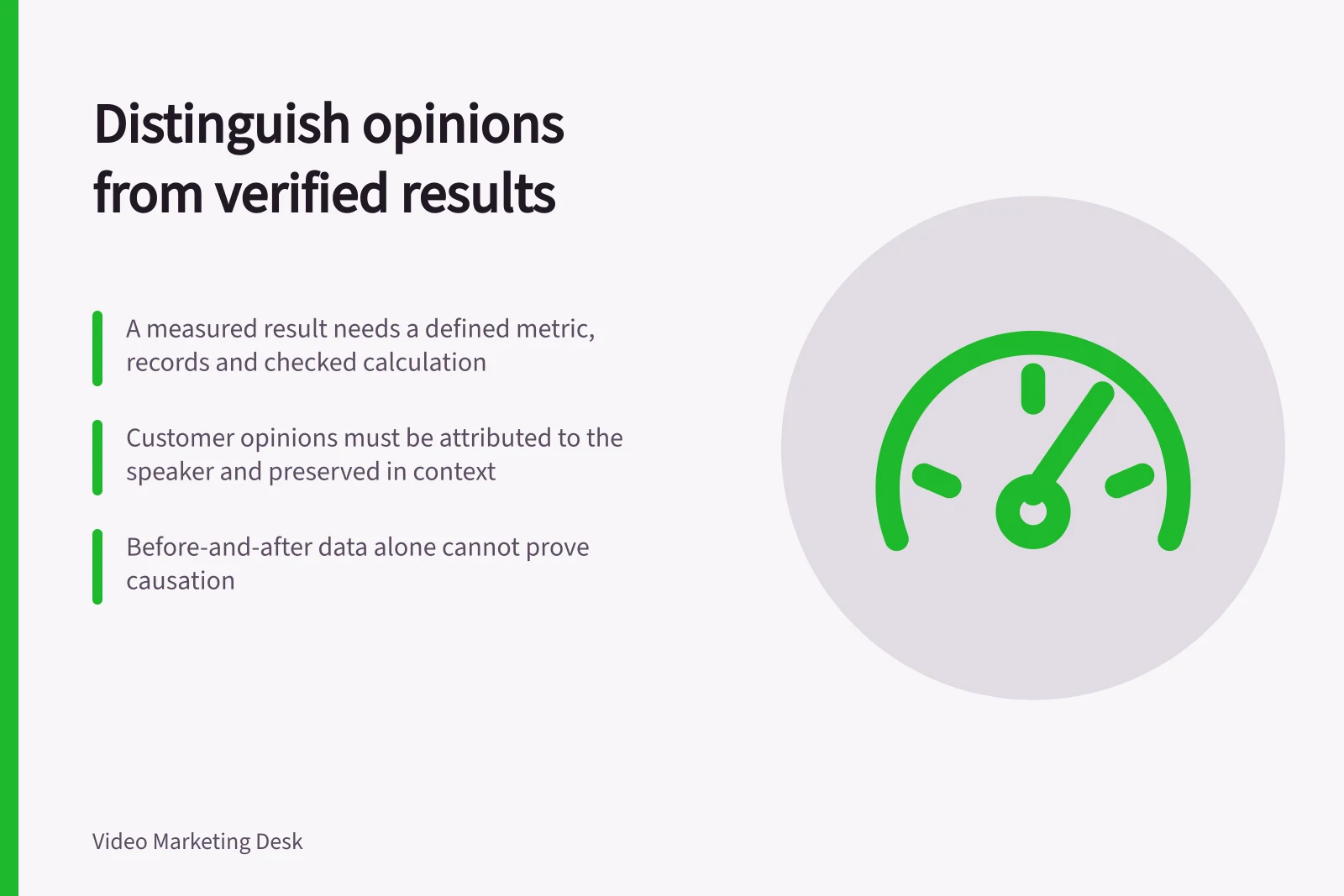
Label each customer case study statement by what supports it. A customer can describe their own experience. A measured result needs a defined metric, records, a checked calculation and a stated scope. Neither automatically predicts what another customer will achieve.
Classify the proposed statement
| Statement | How to present it | What it does not establish alone |
|---|---|---|
| Customer opinion | Attribute it to the speaker and preserve context | A measured improvement |
| Recollection | Identify it as recollection or check records | An exact figure or trend |
| Recorded change | State the metric, group and period | That the supplier caused the change |
| Causal claim | Use only with evidence suited to that claim | Causation from a simple before-and-after figure |
A precise-looking dashboard number is not publishable on that basis alone. Confirm what it counts and how it was extracted.
Make a record for each number
Record the metric definition and unit, source and data owner, groups and periods included, extraction date, exclusions and calculation. For a rate, keep its numerator and denominator. For a comparison, check that both periods use the same definition, and note other changes that could affect interpretation, such as staffing or demand.
Calculate from the underlying values rather than a rounded interview estimate, and have the data owner check the result. If reporting percentage change, calculate (later value − earlier value) ÷ earlier value × 100. Do not use that calculation when the earlier value is zero, and do not confuse a percentage change with a difference in percentage points.
Show enough context on screen for a viewer to interpret the result, such as the metric, affected group and period. Keep fuller definitions in the claim record and accompanying page text when needed. If the figure cannot be explained plainly, leave it out of the video headline.
Key Requirements for Publishing Measured Results
- Metric DefinitionClear explanation of what is being measured (e.g., average response time)
- Data Source & OwnerWho collected and validated the data (e.g., internal CRM system, ATO audit logs)
- Context on ScreenDisplay metric, group and period so viewers can interpret without confusion
Describe observation without claiming cause
A before-and-after record can show that a metric changed; it cannot by itself identify why. If other work occurred at the same time, describe the observed change in its setting. Do not use footage of other teams or locations to suggest that a trial result applied organisation-wide.
For example, a customer might say staff found requests easier to locate. That is their experience. A separate claim that the time to locate a request fell would need a checked measure, period and group. This is an illustrative distinction, not a reported customer result.
Resolve gaps before release
If records cannot be obtained, use a supportable qualitative account or omit the number. If records conflict with the interviewee’s recollection, clarify the difference instead of choosing the more attractive version. Place a material exception beside the result it limits and recheck it after making a shorter cut.
The ACCC can require businesses to back up claims they make about their products or services and may take compliance or enforcement action if a business misleads. Review the final combination of speech, text and pictures so viewers can tell what the customer felt, what was measured and what remains uncertain.
Pre-Release Checklist for Case Study Data
- Record metric definition and unitInclude unit (e.g., minutes, percentage) and clear description
- Confirm data source and ownerIdentify who collected and verified the data
- Check consistency across periodsEnsure same definition used before and after; note changes like staffing or demand
- Clarify gaps or conflictsIf records don’t match recollection, explain difference — don’t choose the more appealing version