Editing
Part of Editing business videos for clarity
Cutting repeated explanations from an interview
Find the strongest complete answer in an interview, trim repetition and check that every cut preserves the speaker’s meaning.
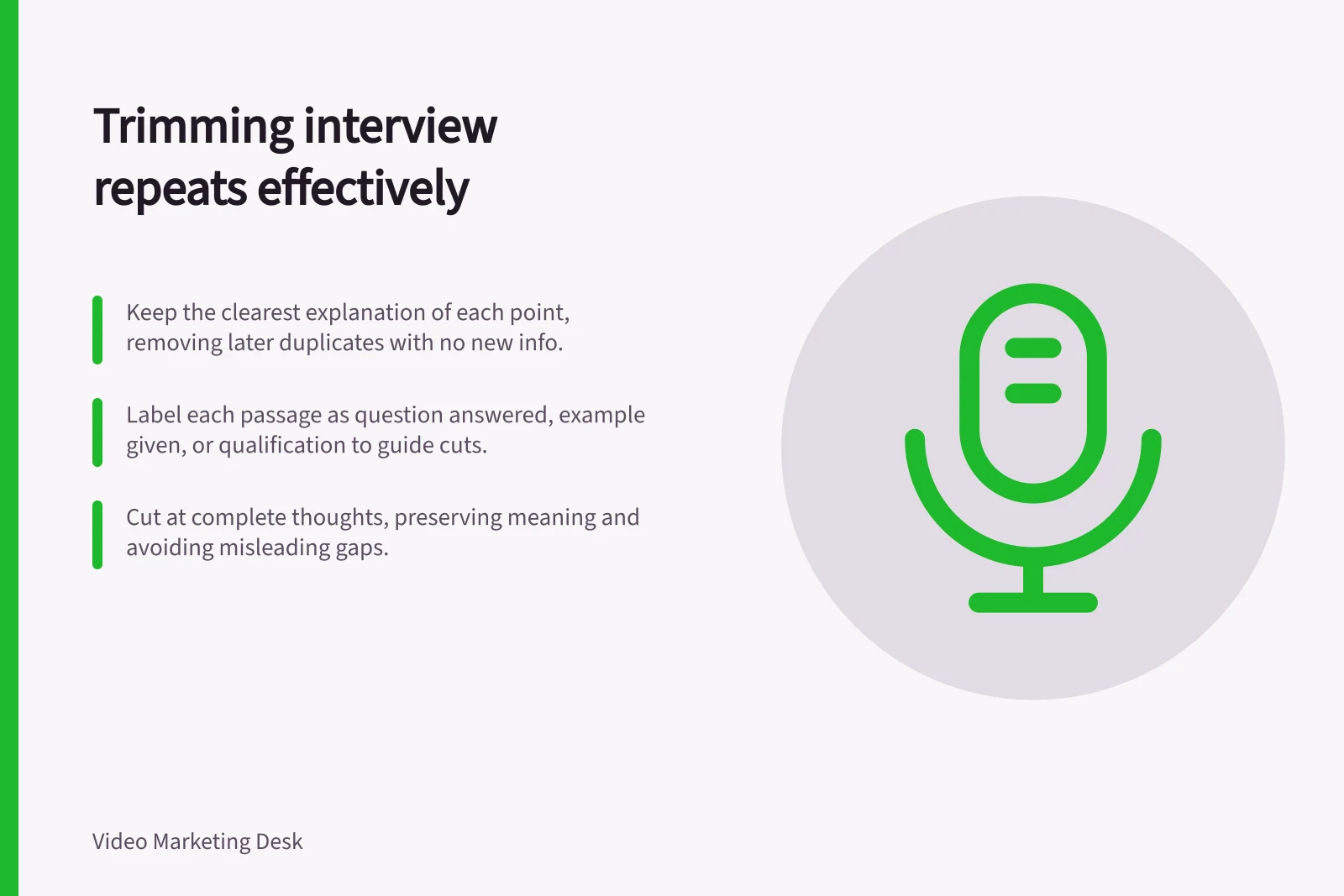
Keep the clearest complete explanation of each point. Remove later passages that add no new information. Judge the cut by what the viewer will understand, not by seconds saved. An apparent repeat may contain a condition, example or correction the first answer needs.
Pros and Cons of Removing Repetition in Interviews
- ProsImproves clarity, reduces viewer fatigue, and maintains focus on key information.
- ConsRisk of losing nuance, tone, or important context if cuts are too aggressive.
Map what each answer contributes
Listen through the interview and label each passage plainly: question answered, point made, example given, qualification. A transcript can speed navigation, but check the recording before treating two similar sentences as interchangeable. Tone, emphasis and the surrounding question may change meaning.
For each point, choose a lead answer that stands on its own. If a later answer supplies the useful example, keep it and remove the repeated setup. If a later passage corrects the earlier one, use the accurate version. Do not combine fragments into a claim the speaker never made.
Suppose a hypothetical interviewee explains an approval process twice. The first answer gives the steps. The second repeats them but adds that a manager must approve certain requests. Keep the condition next to the steps it qualifies.
Cut at a complete thought
Mark the start and end of the sentence you want to keep. Play a little before and after both boundaries. Listen for pronouns without a referent, a breath cut in half, or a sudden change in background sound.
Leave a natural pause when the subject changes. If removing a middle sentence makes the remaining answer misleading, restore context or choose a different passage.
A transcript-led rough cut can help locate and remove repeated speech. Check the picture and sound on the timeline afterwards: a clean sentence on paper can still leave an awkward jump in the filmed performance. A relevant cutaway may cover a visible join, provided it does not suggest evidence that was never shown or disguise a change in meaning.
Decide what stays in the final answer
Listen to the edited answer without consulting the original interview. Can the viewer tell what is being discussed, what the speaker claims and where the claim stops? Compare it with the source recording to confirm the cut preserves those boundaries.
Keep source timecodes for important statements so another reviewer can check them. If the edit makes a customer, employee or expert appear to endorse a conclusion they did not express, rebuild the passage. Replay the cut with the question immediately before it to confirm the answer still makes sense on its own.